ROMAGNA ALBANA
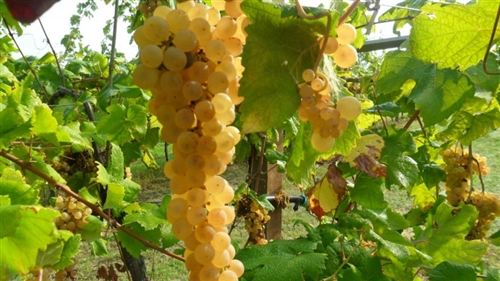
Albana di Romagna is with Trebbiano, the oldest and it is closely linked to the hilltop village of Bertinoro: the legend said that Galla Placidia, roman Empress, in 435 AD tooked a sip of wine and said "you should be drunk in golden bowl" ...Berti in oro and this expression gave the name to the of Bertinoro where, in effect, the microclimate created by the presence of
Spungone Romagna, thi vinefinds its area of greatest expression.
However some scholarly do derive its name from the Colli Albani from which the Roman legionaries start to colonized Romagna. More likely the origin of the name of this variety comes from the quality of the grape, which is considered the best among the white grapes, from
Albus that means white for excellence.
This grape presents long bunches, berry of a beautiful yellow color and large, pentagonal leafs. It was the first white wine in Italy to obtain the DOCG in 1987. The wine has a straw yellow color more or less intense and its aroma remembers floral scents.
The Albana wine is produced in different types:
The
Romagna Albana DOCG dry is especially popular with seafood entrees, quiches, pasta gratin and risotto.
The
Romagna Albana DOCG sweet and
Romagna Albana DOCG sparkling wine perfectly match the cakes from the local tradition as the donut.
The
Romagna Albana Passito DOCG and
Passito Reserve (raisin wine) finds the best match with the Fossa cheese POD accompanied by chestnut honey, savor (jam made with must syrup an fruits) and caramelized figs.
Typical Products